Ayesha Binte Habib

Ayesha B. Habib is Global Data 365's Marketing Manager, managing marketing, branding and content covering Microsoft Dynamics 365, Power BI, Jet Analytics, and business intelligence topics. She works closely with Global Data 365's technical and training team to turn ERP and reporting concepts into practical, accurate guidance for finance, IT and BI leaders.

Leap 2024

Leap 2024 x DeepFest

Leap 2024

Welcome to LEAP 2024, where the future unfolds before your eyes! LEAP is poised to be the pinnacle of technological innovation, bringing together visionaries, pioneers, and enthusiasts from across the globe. Get ready to immerse yourself in a world of cutting-edge advancements, insightful discussions, and transformative experiences.

Location

This year, LEAP 2024 will be held at Riyadh, Saudia Arab from 4-7th of March. With its state-of-the-art facilities and vibrant atmosphere, Riyadh is the perfect setting for a conference of this magnitude.

Topics of LEAP Conference:

At LEAP 2024, we’ll be delving into a wide range of topics that are shaping the future of technology and business. Some of the key themes include:


– Generative AI: Exploring the potential of AI to generate innovative solutions and drive economic growth.


– Sustainability and Social Impact: Tackling pressing global challenges such as climate change, smart cities, and responsible tech development.


– Web3 Revolution: Examining the decentralized future of the internet and its impact on various industries.

History of LEAP Conference:

Leap conference has a rich history of pushing the boundaries of innovation and inspiring change. Since its inception, Leap has been at the forefront of technological advancements, serving as a catalyst for collaboration, creativity, and progress. Each year, LEAP brings together thought leaders, experts, and innovators to share their insights and expertise, shaping the future of technology and business, with LEAP 2024 continuing the tradition.

Why LEAP 2024 is a Must-Visit:

LEAP 2024 is not just another tech conference—it’s a transformative experience that you won’t want to miss. Here’s why:


– Unparalleled Insights: LEAP brings together some of the brightest minds and most innovative companies in the world, providing unparalleled insights into the latest trends and developments.


– Networking Opportunities: Connect with industry leaders, innovators, and peers from around the globe, forging valuable connections that can propel your career and business forward.


– Inspiring Keynotes and Sessions: From thought-provoking keynotes to hands-on workshops, LEAP offers a diverse range of sessions that will challenge, inspire, and empower you.


– Exciting Experiences: In addition to its stellar lineup of speakers and sessions, LEAP also offers a host of exciting experiences, including Deep Fest and immersive cultural showcases.


But that’s not all! We are thrilled to announce that GlobalData365 will be a part of LEAP 2024. As a leading tech company, specialized in Microsoft dynamics ERP solutions and official distributor of Middle East;

  1. Jet Reports:
    Join us at LEAP 2024 to discover Jet Reports, a key offering in GlobalData365’s suite of solutions. As the official distributor of Jet Reports in the UAE. We are excited to showcase this dynamic reporting tool that seamlessly integrates with Microsoft Dynamics ERP solutions enabling businesses to generate accurate, real-time financial and operational reports directly from their ERP systems.
  2. Jet Analytics:
    Experience the cutting-edge capabilities of Jet Analytics, another exceptional product in GlobalData365’s portfolio. As the official distributor of Jet Analytics in the UAE, we’re thrilled to highlight this powerful business intelligence and data analytics platform. Jet Analytics enhances the Microsoft Dynamics ERP experience by providing advanced analytics, data warehousing, and self-service reporting functionalities. By offering a comprehensive view of business data and performance, Jet Analytics equips organizations with the tools to drive operational efficiency and gain a competitive edge in the market.
  3. Power BI:
    One of our key offerings for leap conference, Power BI stands as a premier business intelligence tool renowned for its ability to visually analyze and share insights from data. This dynamic platform equips organizations with robust analytics capabilities, empowering strategic initiatives. We will provide you with dashboards suited to your preference for better decision-making and analysis.

Connect with us and learn more about our products at leap 2024 or book a meeting with our expert consultants and boost your business with the right choice.

Get 30 days free upgrade to Jet Reports.

Share this blog on:

Search Blog

About Us

Global Data 365 is composed of highly skilled professionals who specialize in streamlining the data and automate the reporting process through the utilization of various business intelligence tools.

Follow us on:

Want to try Jet Analytics?

Get Free License for 30 Days

Jet Analytics Hero Section

Subscribe to Our Newsletter

[wpforms id="26968"]

Leap 2024 Read More »

data lake vs data warehouse

12 Key Differences between Data Lake and Data Warehouse

data lake vs data warehouse

With the rise of big data and the explosion of new data sources, traditional data warehousing approaches may not be sufficient to meet the needs of modern data management and analytics, creating confusions between Data Lake vs Data warehouse. This has led to the development of new approaches, including Data Lake and Data Warehouse. Each approach offers unique benefits and drawbacks, and understanding the differences between them is critical to making informed decisions about data management and analytics.

Data Lake

A Data Lake is a centralized repository that allows businesses to store vast amounts of raw, unstructured, or structured data at scale. It provides a flexible storage environment, enabling organizations to ingest diverse data types without the need for upfront structuring. This unrefined data can then be processed and analyzed for valuable insights, making Data Lakes ideal for handling large volumes of real-time and varied data.

Benefits and Use Cases of Data Lake

Data lakes provide scalable and cost-effective storage, accommodating diverse data types such as raw and unstructured data for flexible analysis. With a focus on real-time analytics and advanced capabilities like machine learning, they support innovation in algorithm development. Cost-efficient storage solutions, often leveraging scalable cloud storage, make data lakes economical for managing large datasets.


Use cases range from big data analytics, IoT data management, and ad hoc analysis to long-term data archiving and achieving a 360-degree customer view. In essence, data lakes offer dynamic repositories that empower organizations with flexibility, real-time insights, and comprehensive data management solutions.

Data Warehouse

On the other hand, a Data Warehouse is a structured, organized database optimized for analysis and reporting. It is designed to store structured data from various sources in a format that is easily query able and supports business intelligence reporting. Data Warehouses are characterized by their schema-on-write approach, requiring data to be structured before entering the system, ensuring a high level of consistency for analytical purposes.

Benefits and Use Cases of Data Warehouse

Data warehouses offer a multitude of benefits, including optimized structured data analysis for improved query performance and efficient reporting. They preserve historical data for time-series analysis and audit trails, enhance business intelligence through data consolidation and dashboard creation, ensure data quality and consistency through cleansing processes, and provide scalability to handle growing data volumes.


Common use cases encompass business performance analysis, customer relationship management, supply chain optimization, financial reporting and compliance, and human resources analytics.

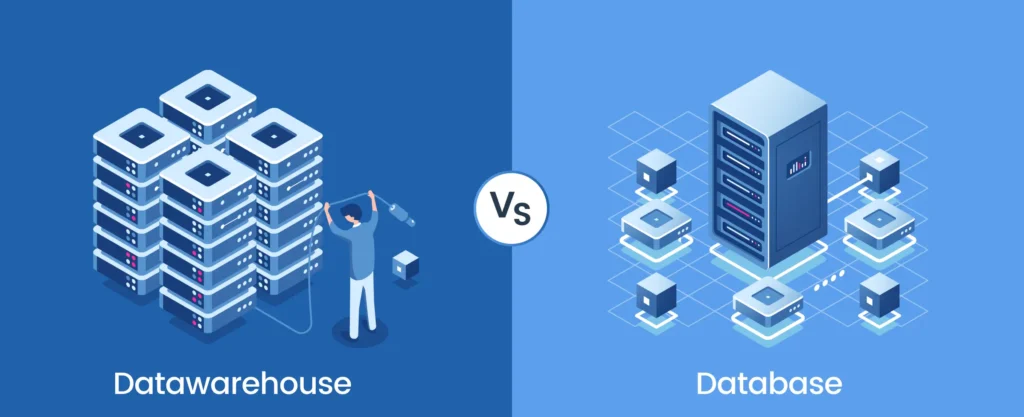
Find the visual representation and difference between: Data Lake vs Data Warehouse.

Data Lake vs Datawarehouse: Key Differences

Features 

Data Lake

Data Warehouse 

Purpose 


Used for storing vast amounts of diverse data types for future analysis. 

Optimized for large-scale analytical queries, storing historical data for reporting and analysis. 

Data Type 


Stores raw, unprocessed data in its native format. 

Stores summarized, aggregated, and historical data. 

Data Structure 

Schema-on-read, allowing for flexibility in data storage. 

Optimized for read-heavy operations (OLAP – Online Analytical Processing). 

Users 


Primarily used by data engineers, data scientists, and machine learning teams. 

Mainly used by business analysts, data scientists, and decision-makers for insights and reporting. 

Data Volume 

Holds vast amounts of unstructured and structured data. 

Handles large volumes of historical data from various sources. 

Performance 


Performance can vary; optimized for large data ingestion rather than query speed. 

High performance for complex queries and large-scale data retrieval for analysis. 

Schema Design 

Uses a flexible schema design; data is often stored without a predefined schema. 

Denormalized schema (e.g., star or snowflake schema) for faster query performance. 

Data Processing 


Processes a wide variety of data types, including structured, semi-structured, and unstructured data. 

Processes complex  queries requiring significant data aggregation. 

Concurrency 

Supports high concurrency for data ingestion and retrieval.


Supports a lower number of users. 

Storage Cost 


Typically cheaper to store vast amounts of data due to lower storage costs. 


Higher storage costs due to large datasets and complex processing requirements. 


Example Use Cases 


Data exploration, machine learning, real-time analytics. 

Business intelligence reporting, trend analysis, forecasting, decision support. 

Data Source 

Captures data from various sources, including social media, IoT devices, and unstructured data. 

Aggregates data from multiple sources, including databases, external systems, and log files. 

  1. Data Type:
    Data Lake: Stores raw, unprocessed data in its native format.
    Data Warehouse: Stores summarized, aggregated, and historical data.
     
  2. Purpose:
    Data Lake: Used for storing vast amounts of diverse data types for future analysis.
    Data Warehouse: Optimized for large-scale analytical queries and historical data analysis.

  3. Data Structure: 
    Data Lake: Schema-on-read, allowing for flexibility in data storage.
    Data Warehouse: Optimized for read-heavy operations (OLAP – Online Analytical Processing).

  4. Users:
    Data Lake: Primarily used by data engineers, data scientists, and machine learning teams.
    Data Warehouse: Mainly used by business analysts, data scientists, and decision-makers for insights and reporting.

  5. Data Volume:
    Data Lake: Holds vast amounts of unstructured and structured data. 
    Data Warehouse: Handles large volumes of historical data from multiple sources.

  6. Performance: 
    Data Lake
    : Performance can vary; optimized for large data ingestion rather than query speed. 
    Data Warehouse: High performance for complex queries and large-scale data retrieval.

  7. Schema Design:
    Data Lake: Uses a flexible schema design; data is often stored without a predefined schema. 
    Data Warehouse: Denormalized schema (e.g., star or snowflake schema) for faster query performance.

  8. Data Processing:
    Data Lake: Processes a wide variety of data types, including structured, semi-structured, and unstructured data. 
    Data Warehouse: Processes complex queries requiring significant data aggregation.

  9. Concurrency:
    Data Lake: Supports high concurrency for data ingestion and retrieval. 
    Data Warehouse: Supports a lower number of users.

  10. Storage Cost:
    Data Lake: Typically cheaper to store vast amounts of data due to lower storage costs.
    Data Warehouse: Higher storage costs due to large datasets and complex processing.

  11. Data Source:
    Data Lake: Captures data from various sources, including social media, IoT devices, and unstructured data. 
    Data Warehouse: Aggregates data from multiple sources, including databases, external systems, and log files.

  12. Example Use Cases: 
    Data Lake: Data exploration, machine learning, real-time analytics. 
    Data Warehouse: Business intelligence reporting, trend analysis, forecasting. 

Finding the Right Fit: data lake vs data warehouse

Is there room for both Data Lake and Data Warehouse in your data strategy? Explore the benefits of adopting a hybrid approach, seamlessly integrating the strengths of both solutions for comprehensive data management. Discover the factors to consider when choosing between Data Lake and Data Warehouse solutions. From cost considerations to scalability needs and varying data types and formats, find the perfect fit with Global Data 365 for your business’s unique requirements by contacting us now.

Simplify Your Data – Get a Free Consultation!

Share this blog on:

Search Blog

About Us

Global Data 365 is composed of highly skilled professionals who specialize in streamlining the data and automate the reporting process through the utilization of various business intelligence tools.

Follow us on:

Want to try Jet Analytics?

Get Free License for 30 Days

Jet Analytics Hero Section

Subscribe to Our Newsletter

[wpforms id="26968"]

Data Lake vs Data Warehouse Read More »

Directions EMEA

Directions EMEA 2023: Guiding the Future of Microsoft Dynamics in EMEA

Directions EMEA

Location:

Quai Charles de Gaulle, Lyon, France

Every year, the Microsoft Dynamics community eagerly anticipates the Directions EMEA conference. This annual gathering of partners, developers, and industry experts is a cornerstone event. It provides a platform to showcase the latest innovations, share insights, and discuss the future of Microsoft Dynamics.

Key Themes of Direction EMEA 2023:

In Directions EMEA 2023 there are several key themes and focus areas such as discussions, sessions, and workshops throughout the conference.

1. How Directions EMEA 2023 is Shaping the Future of Business Processes

In today’s rapidly evolving business landscape, digital transformation is no longer a luxury but a necessity. The conference will delve into strategies for leveraging ERP solutions, automation tools, and cloud-based technologies to drive business growth. Attendees can expect to gain insights into the latest trends in digital transformation and how to implement them effectively.

2. Insights from Experts

Every industry faces its unique set of challenges and Directions EMEA 2023. It will feature discussions on industry-specific issues and best practices shared by successful businesses. These insights will equip attendees with valuable knowledge to address the hurdles specific to their sectors.

3. Networking Opportunities

The conference offers an array of B2B networking events, providing attendees with a chance to connect with industry leaders and peers from across the EMEA region. The power of collaboration cannot be over-ruled, and these connections may lead to partnerships, innovative ideas, and collaborative projects that propel businesses forward.

4. Product Launches and Innovations

Microsoft Dynamics is known for its innovative solutions, and the conference will see the unveiling of new product announcements related to ERP software and technological advancements. These revelations will give attendees a glimpse of the future tools and capabilities that can enhance their operations

The Benefits of Attending Directions EMEA 2023 for Businesses in Europe, the Middle East, and Africa

For businesses in the EMEA region, this conference offers a unique opportunity. You can stay at the forefront of technological and industry trends. The benefits include:


  • Educational Opportunities: The conference will feature expert-led sessions, workshops, and discussions, providing attendees with invaluable knowledge and insights into future industry trends. These educational opportunities can help businesses stay competitive and relevant.
  • Networking Advantages: The power of networking at Directions EMEA 2023 cannot be overstated. Connecting with industry leaders and peers from diverse backgrounds can lead to collaborations, partnerships, and the sharing of innovative ideas that drive growth.
  • Product Knowledge: With Microsoft unveiling new technologies and product launches, attendees will understand the latest tools and solutions that can enhance their business operations. This knowledge can translate into a competitive advantage in the marketplace.

Why Businesses Should Mark their Calendars for Directions EMEA 2023?

As the platform continues to evolve and adapts to the needs of modern businesses. This conference serves as a compass, guiding partners and developers toward a future of endless possibilities. By attending Directions EMEA, participants will not only be part of this transformative experience but also contribute to shaping the future of the Microsoft Dynamics ecosystem.


Directions EMEA 2023 is set to be a game-changing event for the Microsoft Dynamics community. With its focus on innovation, collaboration, and knowledge sharing. This conference will equip attendees with the tools and insights they need to thrive in an ever-evolving business landscape. As we eagerly await the arrival of Directions EMEA 2023, one thing is certain:thefuture of Microsoft Dynamics looks brighter than ever before. Mark your calendars and be ready to embrace the future of business in the EMEA region.

We’re excited to announce that Global Data 365 will be a part of Directions EMEA 2023, as a face of Middle East Business showcasing our Microsoft Dynamics ERP solutions.


Jet Reports: Explore Jet Reports, a pivotal element of GlobalData365’s suite of solutions. As the exclusive distributor of Jet Reports in the UAE, we’re eager to introduce this dynamic reporting tool that seamlessly integrates with Microsoft Dynamics ERP solutions. With Jet Reports, businesses can easily generate precise, real-time financial and operational reports directly from their ERP systems.


Jet Analytics: Dive into the innovative capabilities of Jet Analytics, another remarkable product within GlobalData365’s suit of solutions. Serving as the official distributor of Jet Analytics in the UAE, we’re excited to highlight this robust business intelligence and data analytics platform. Jet Analytics enhances the Microsoft Dynamics ERP experience by offering advanced analytics, data warehousing, and self-service reporting functionalities.


Power BI: As one of our core offerings, Power BI stands as a premier business intelligence tool known for its ability to visually analyze and share insights from data. This dynamic platform empowers organizations with robust analytics capabilities, supporting strategic initiatives.

Get 30 days free upgrade to Jet Reports.

Share this blog on:

Search Blog

About Us

Global Data 365 is composed of highly skilled professionals who specialize in streamlining the data and automate the reporting process through the utilization of various business intelligence tools.

Follow us on:

Want to try Jet Analytics?

Get Free License for 30 Days

Jet Analytics Hero Section

Subscribe to Our Newsletter

[wpforms id="26968"]

Directions EMEA 2023: Guiding the Future of Microsoft Dynamics in Europe, the Middle East, and Africa Read More »